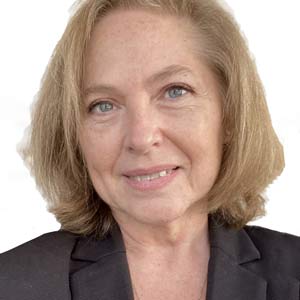
Victoria Escandell-Vidal es Catedrática de Lingüística General en la Universidad Complutense de Madrid. Su principal área de investigación es la interfaz gramática/semántica/pragmática con una perspectiva general y contrastiva, considerando las lenguas románicas y el inglés. Sus temas de investigación incluyen las oraciones interrogativas, los tiempos verbales, las construcciones copulativas, la estructura informativa, la evidencialidad y la prosodia. Se centra sobre todo en el significado procedimental (las instrucciones de procesamiento codificadas por algunos elementos lingüísticos que guían el proceso inferencial de interpretación de los enunciados). También ha investigado el papel de la cognición social en diversos aspectos de la interpretación y la adquisición de L2, así como la arquitectura general del lenguaje y la teoría lingüística. Es autora de varios libros y de numerosos artículos de investigación. Es directora de la Revista Española de Lingüística. En 2022 fue elegida miembro de número de la Academia Europaea (Sección de Lingüística).
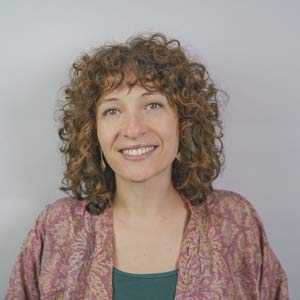
Irene Fioravanti is a postdoctoral researcher in Applied Linguistics at the University for Foreigners of Perugia, Italy. In 2020, she obtained her PhD in Linguistics at the University for Foreigners of Siena with a thesis titled On the intriguing nature of collocations: psycholinguistic studies in first and second language. Her research interests encompass Corpus Linguistics, Psycholinguistics, Second Language Acquisition and Phraseology. Specifically, her work explores the psychological aspects of second language acquisition, the processing and use of phraseological units in both L1 and L2 speakers, and the integration of psycholinguistic methodologies such as eye-tracking and reaction times with corpus-based approaches. She has been reviewer for various journals including Studies in second language acquisition and Applied Psycholinguistics. She has published articles in journals such as Second Language Research, Language Learning, and Languages, and has presented her research at international conferences including Vocab@, EuroSLA, and the LCR Conference. Her book, Tra le parole nella mente. Studi interdisciplinari sulle collocazioni lessicali (FrancoAngeli), was published in 2022.
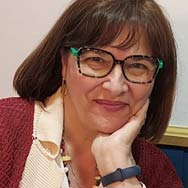
M. Carmen Fonseca-Mora is Full Professor of Language Education in the department of English studies at the University of Huelva (Spain), where she has been Vice-chancellor of Lifelong Learning and Innovation Programs, head of the Research Center Contemporary Thinking and Innovation for Social Development and of the Research group ReALL, Research in Affective Language Learning.
Her main research interests and international projects are on language acquisition and language teaching where affect in language learning, melodies in language acquisition, multimodal literacy and scientific communication are fields for which she feels a strong passion. Currently, she is a member of the European Universities Alliance PIONEER, co-funded by the European Union under the Erasmus+ programme (Grant Agreement n°101177236).